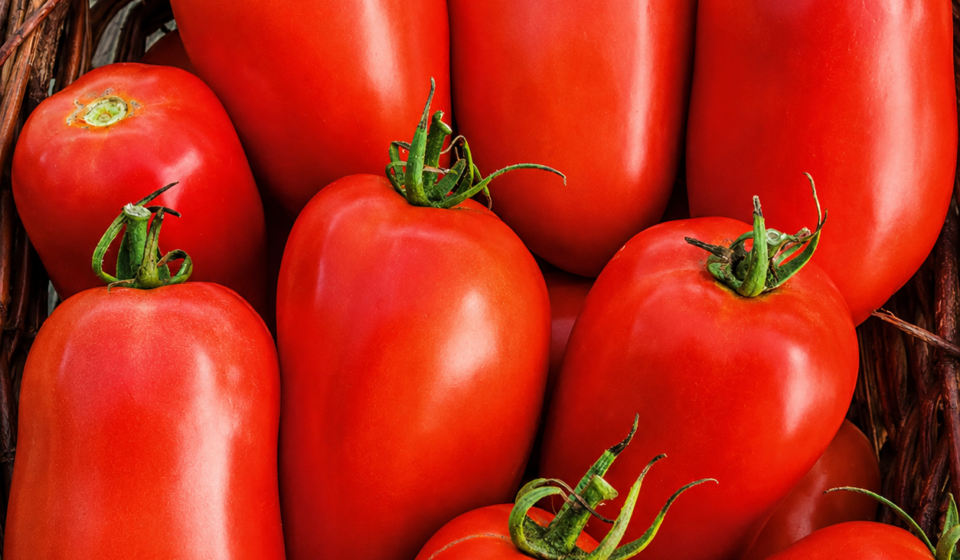

Roma tomatoes are the oval, meaty plum tomatoes most home cooks reach for when a recipe calls for sauce, paste or canning. They have thicker flesh, fewer seeds and less water than round slicing tomatoes, which is why they hold their shape and reduce into a rich sauce rather than a watery one. Despite the Italian sounding name, Roma is an American variety, bred by the U.S. Department of Agriculture in the 1950s. This article looks at where Roma tomatoes come from, what’s actually in them nutritionally, and how to cook and grow them well.
Origin: An American Tomato With Italian Roots
The Roma tomato was developed by USDA Agricultural Research Service breeders at the Beltsville Agricultural Research Center in Maryland, released around 1955 as part of a program to improve tomatoes for canning and paste production. It is generally described as a cross involving the Italian heirloom San Marzano and the Pan America tomato, bred specifically for disease resistance rather than flavor novelty. (Wikipedia; Gardener’s Path)
An improved version, ‘Roma VF,’ followed in the 1960s, bred for resistance to verticillium and fusarium wilt two soil borne diseases that had plagued earlier tomato crops. That resistance is why the “VF” designation still appears on many Roma seed packets today, and why most modern Roma type cultivars, including some now sold as heirlooms, carry the same built in resistance. (Gardener’s Path)
Roma is technically an open pollinated variety rather than a hybrid, though breeders have continued refining it over the decades. Because “Roma” has become such a familiar shorthand for any oblong paste tomato, the name is now used loosely in supermarkets and seed catalogues to describe the whole plum tomato category, not just the original USDA cultivar. (Wikipedia)
What Makes Roma Tomatoes Different
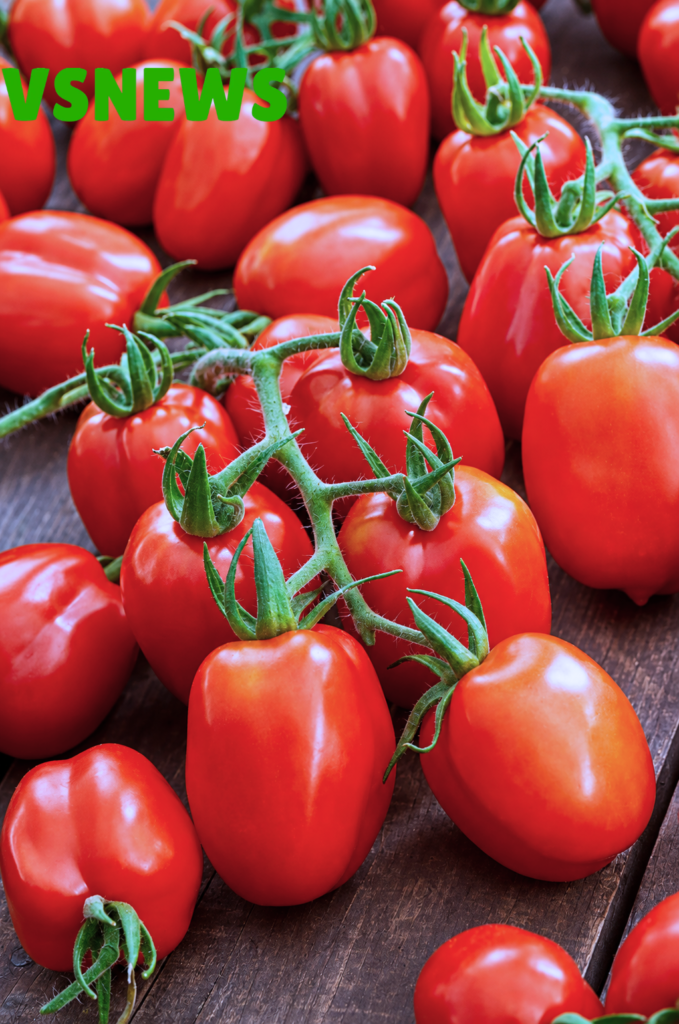
Compared with beefsteak or cherry tomatoes, Roma tomatoes are oblong or egg shaped, typically two to three inches long, with thick walls, dense flesh and a small seed cavity. That lower water and seed content is precisely why they’re preferred for sauces, salsas, purées and canning: they cook down faster into a thicker result with less need for reduction. (Gardener’s Path)
The plants themselves are determinate, meaning they grow to a set, bushy height (usually three to four feet) and produce most of their fruit in one concentrated harvest window rather than continuously through the season a practical trait for gardeners who want a single big batch for canning. (Ecoseedbank)
Nutrition Facts
Roma tomatoes share the basic nutrition profile of tomatoes generally, since USDA data does not maintain a separate database entry specifically for the Roma cultivar; figures for “tomatoes, red, ripe, raw” are the standard reference point used across nutrition tools. Per 100 grams, raw tomatoes provide roughly 18 calories, 0.9 grams of protein, 3.9 grams of carbohydrate, 1.2 grams of fibre and about 94.5 grams of water, according to USDA FoodData Central. (USDA FoodData Central)
Tomatoes are a useful source of vitamin C, vitamin A, potassium and folate, and they’re one of the richest dietary sources of lycopene, the red carotenoid pigment linked in various studies to heart and cardiovascular benefits. Because lycopene is fat soluble, it’s better absorbed when tomatoes are cooked with a little olive oil rather than eaten completely raw and dry a detail borne out by nutrition research summarized by extension and food science sources. (Gardening Channel)
Beyond that, claims about exact calorie counts per Roma tomato specifically vary quite a bit between commercial nutrition tracking sites some cite around 11 calories per small tomato, others closer to 15–20 which reflects differences in fruit size rather than a single fixed figure. There is no reliable public confirmation of an official USDA entry that isolates “Roma” nutrition data from tomatoes generally, so treat any very precise Roma specific numbers with some caution.
Cooking With Roma Tomatoes
Roma’s low moisture and thick flesh make it the standard choice for:
- Tomato sauce and marinara, where less water means faster reduction and deeper flavor
- Salsa, since the firmer flesh doesn’t turn the mixture watery
- Canning and passata, a traditional use tied to the variety’s original breeding purpose
- Roasting, where the low water content concentrates sweetness rather than steaming the fruit
- Sun drying, thanks to the thick walls and small seed cavity
They can also be eaten raw in salads or sandwiches, though their texture is denser and less juicy than a slicing tomato, so many cooks prefer them cooked. (Gardening Channel)
Growing Roma Tomatoes
For home gardeners, Roma is popular because it’s relatively forgiving. The plants are determinate, so they don’t need the extensive staking, trellising or pruning that indeterminate vining tomatoes require, though a single stake or cage is still recommended once fruit sets and weighs down the branches. Roma tomatoes generally take around 75–80 days to reach maturity from transplant, and should only go into the ground after the last frost, since cold soil and air stress the plants. (Ecoseedbank; Nature’s Produce)
The variety’s built in resistance to verticillium and fusarium wilt (the “VF” in Roma VF) makes it a dependable choice in regions where those soil diseases are common, which is part of why it has remained a staple in home gardens and commercial fields alike for seven decades.
FAQs
Are Roma tomatoes the same as plum tomatoes?
“Roma” is a specific cultivar developed by the USDA, but the term is now widely used as a generic name for the broader plum tomato category oblong, meaty paste tomatoes in general. Not every plum tomato sold as “Roma” is the original 1955 cultivar. (Wikipedia)
Are Roma tomatoes good for eating raw?
Yes, though their firmer, less juicy texture suits sandwiches and chunky salads better than dishes that rely on juiciness, like a caprese salad, where a beefsteak or heirloom variety works better.
Why are Roma tomatoes used for sauce instead of other tomatoes?
Their lower water content and fewer seeds mean sauces reduce faster and end up thicker, without needing to cook off as much liquid.
you may also read about: https://vsnews.co.uk/mia-sara/