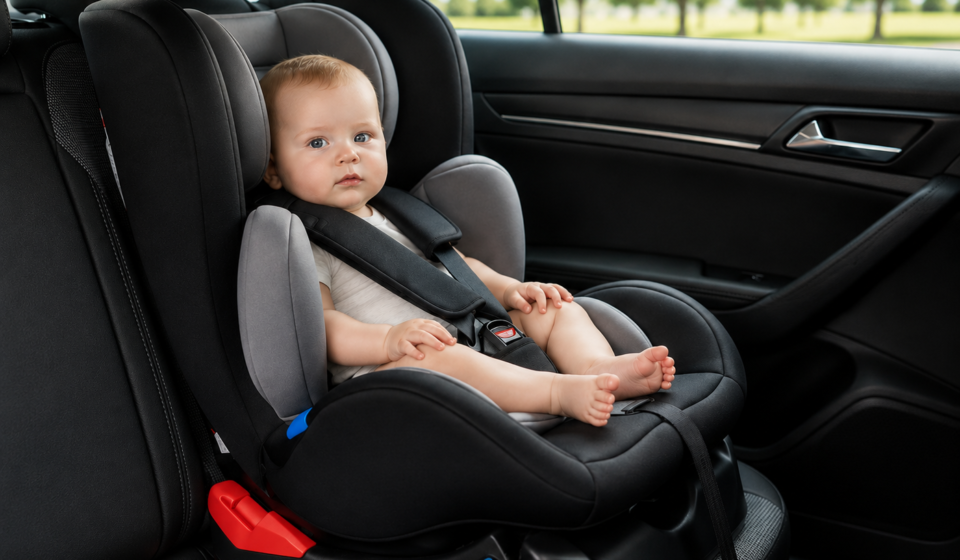

Finding the best toddler car seats isn’t really about picking a brand off a bestseller list it’s about matching a seat to your child’s current height and weight, keeping them rear-facing for as long as the seat allows, and installing it correctly every time. Toddlers, roughly ages one to three, sit at a stage where safety authorities in both the UK and US strongly favour extended rear-facing over an early switch to forward-facing. Below is what the official guidance says, how UK and US rules differ, and which convertible and all-in-one seats independent reviewers currently rate highest.
Why the “best” seat depends on your child, not the label
Car seats and booster seats provide protection for infants and children in a crash, yet car crashes are a leading cause of death for children ages 1 to 13, according to the National Highway Traffic Safety Administration (NHTSA). That’s the reason regulators on both sides of the Atlantic treat car seat choice as a size-and-stage decision rather than a shopping preference.
NHTSA’s guidance is to keep a child in their car seat for as long as possible, as long as they still fit within the manufacturer’s height and weight limits, and to keep children in the back seat at least through age 12. For boosters specifically, a child should stay in a booster seat until they’re big enough for an adult seat belt to fit properly meaning the lap belt sits snugly across the upper thighs, not the stomach, and the shoulder belt crosses the chest and shoulder, not the neck or face. NHTSA
In the UK, the legal framework is height- and age-based rather than purely weight-based. Children must normally use a child car seat until they’re 12 years old or 135 centimetres tall, whichever comes first, and children over 12 or taller than 135cm must wear a seat belt. Crucially for toddlers, height-based seats must be rear-facing until a child is over 15 months old, and they can move to a forward-facing seat only once they pass that age. That 15-month rear-facing minimum is a legal floor in the UK, not just a recommendation parents shopping for a toddler seat there need one that meets it. GOV.UKGOV.UK
Rear-facing for longer: what the evidence shows
Both UK and US bodies push parents toward rear-facing well past infancy, because a rear-facing seat spreads crash forces across the back of the seat and supports a toddler’s proportionally heavy head and still-developing neck. The American Academy of Pediatrics (AAP), through its parent-facing site HealthyChildren.org, publishes an annually updated list of car seat features and recommendations for parents choosing a seat for their child, based on peer-reviewed literature, and notes that the AAP is not itself a testing or standard-setting body for pass/fail crash performance, that role sits with NHTSA and its Federal Motor Vehicle Safety Standard (FMVSS) 213. HealthyChildren.orgHealthyChildren.org
Practically, this means the best toddler car seats are usually convertible or all-in-one models with a high rear-facing weight limit often 40 to 50 lbs (roughly 18–23kg) so a child can stay rear-facing well beyond their second birthday if they haven’t outgrown the seat by height first.
What independent reviewers currently recommend
Forbes Vetted’s 2026 toddler car seat guide, compiled with input from certified child passenger safety technicians (CPSTs), named the Britax One4Life ClickTight All-In-One Convertible Car Seat as its overall pick, the Graco 4Ever DLX 4-in-1 as best all-in-one, the Britax Poplar as best convertible, the Chicco Myfit Harness + Booster as best harness-to-booster option, the Baby Jogger City Turn as best rotating seat, and the Graco Extend2Fit as best value. The reviewers noted the Britax One4Life allows extended rear-facing up to 50 pounds and uses a no-rethread harness, which adjusts to a growing toddler without unthreading and rerouting the straps a common source of installation error. ForbesForbes
One CPST interviewed for that guide, Gia Ramsey, made a point worth repeating for anyone comparing seats: “The good news is that all car seats sold in the U.S. meet the Federal Motor Vehicle Safety Standards set by NHTSA, meaning they’re all safe when used correctly.” Beyond that baseline, she pointed to extras such as anti-rebound bars, energy-absorbing foam and a steel frame as differentiators, not requirements. On installation, her guidance was specific: for rear-facing seats the harness straps should come from at or below the child’s shoulders, while for forward-facing seats they should come from at or above the shoulders, with straps snug enough that no slack can be pinched at the shoulder and the chest clip sitting level with the armpit or nipple. Best Toddler Car Seats 2026 – Forbes Vetted +2
Consumer Reports, which lab-tests seats independently, covers all-in-one seats as a distinct category aimed at families who want one seat to last from infancy through booster age, highlighting features like cinch straps and lockoffs that help secure the seat whether installed with LATCH or the vehicle seat belt, plus no-rethread harnesses and removable, washable covers. Consumer Reports
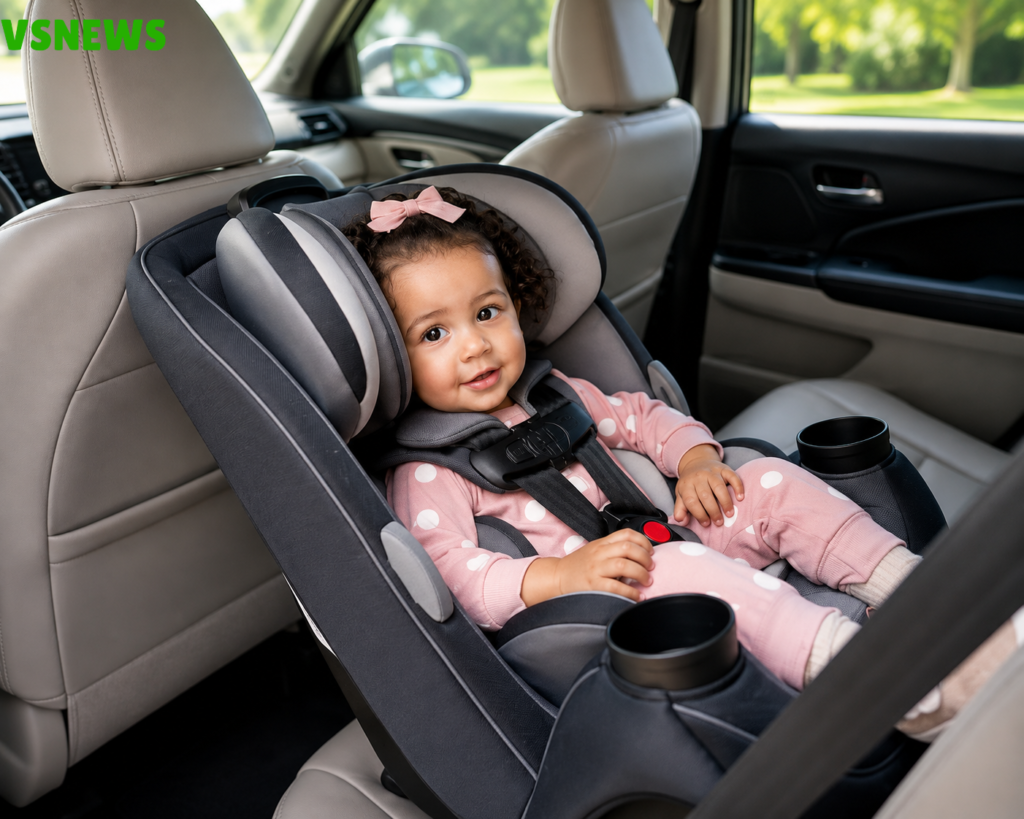
UK-specific labelling to check before buying
If you’re shopping in the UK, look for the approval label rather than relying on a US review alone, since not every US-market seat is sold or approved there. Only seats approved to the UN standard ECE Regulation 44.04 (or the older 44.03) or the newer i-Size regulation R129 are legal, and these carry a label with a capital “E” in a circle. i-Size seats are height-based rather than weight-based and, as noted above, must remain rear-facing until at least 15 months. RAC
Booster stage: when toddlers move on
Toddler seats with harnesses generally give way to booster seats once a child outgrows the harness by height or weight commonly starting around age 4. In the UK, backless booster seats approved since March 2017 are only for children weighing more than 22kg or taller than 125cm, which rules them out for most toddlers; a forward-facing harnessed seat remains the safer choice at that age. High-back boosters, which retain a headrest and side support, are widely considered the more protective booster style for younger children who have just moved out of a harness. RAC
A practical shortlist approach
Rather than chasing a single “best” seat, match the shortlist to your situation:
- Extended rear-facing priority: Britax One4Life or a similarly rated convertible with a 40–50 lb rear-facing limit.
- One seat from birth to booster: Graco 4Ever DLX or another all-in-one, reviewed by Consumer Reports for lab-tested crash performance.
- Budget-conscious families: Graco Extend2Fit, flagged by Forbes Vetted as the best-value pick without dropping rear-facing capacity.
- UK buyers: confirm i-Size (R129) or ECE R44/04 approval and the 15-month rear-facing minimum before purchasing.
Whichever seat you choose, get the installation checked. NHTSA runs free inspection events, including National Seat Check Saturday during Child Passenger Safety Week each September, where certified technicians verify installation at no cost a step worth taking even for experienced parents, since misuse is common and largely preventable. NHTSA
you may also read about: Best Ensalada Waldorf Argentina Near Me: A Guide