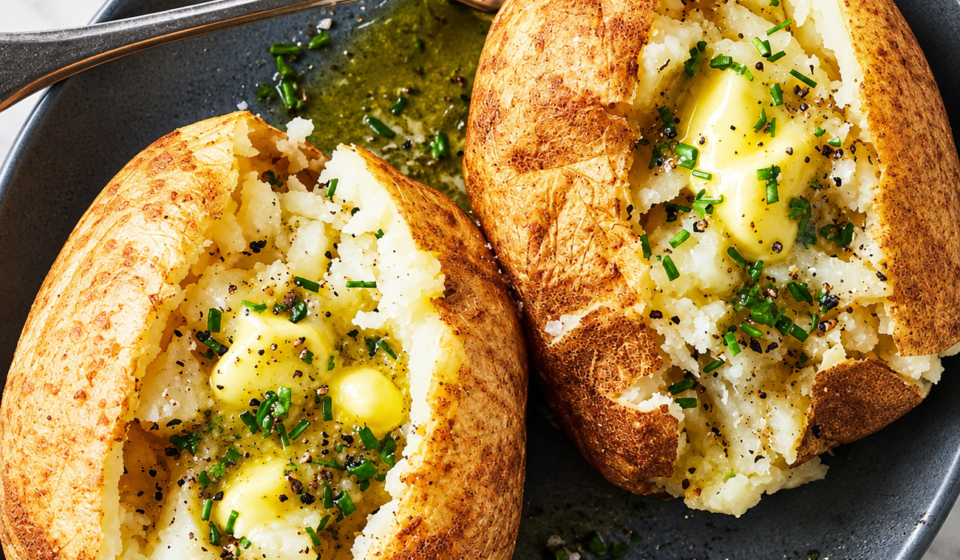

A jacket potato in air fryer form is one of the quickest ways to get a proper baked potato: crisp, salted skin outside, soft and fluffy inside, without heating up a full-size oven. Most home recipes agree on a similar method prick the potato, coat it lightly in oil and salt, then cook at around 180–200°C (350–400°F) for roughly 40 to 50 minutes, turning it halfway through. Smaller potatoes cook faster, larger ones take longer, and every air fryer model varies slightly, so checking for doneness with a knife or skewer matters more than watching the clock.
Below is a practical breakdown of times, temperatures, and the small details like why some skins never crisp up, or how to safely reheat leftovers that make the difference between a good jacket potato and a great one.
Why cook a jacket potato in an air fryer
The main appeal is speed and convenience. Maldon Salt, the UK salt producer that publishes air fryer recipes on its site, notes that a jacket potato baked in a conventional oven at 200°C typically takes 1 hour to 1 hour 20 minutes, while the air fryer version is usually ready in well under an hour and doesn’t require preheating a large oven. That’s a meaningful saving of both time and energy, particularly for one or two potatoes rather than a full tray.
The other advantage is texture. Because an air fryer circulates hot air tightly around the food in a small chamber, the skin dries out and crisps more evenly than it often does in a domestic oven, without needing extra fat.
Jacket potato in air fryer: times and temperatures
Recipe testing across several UK and US sources points to a fairly consistent range, though exact figures depend on potato size and air fryer wattage.
- Medium to large potatoes, air-fry only: Dairy brand Arla’s recipe developers recommend baking at 180°C for around 45 minutes, noting that very large potatoes may need closer to an hour, while smaller ones can be ready in 35–40 minutes. For a crunchier skin, they suggest raising the temperature to 200°C and shortening the time to 35–45 minutes.
- A two-stage low-then-high method: One UK recipe developer cooks at 170°C for 30 minutes, turns the potatoes, then finishes at 190°C for a further 30 minutes until the skins are crisp and the flesh feels soft when squeezed.
- US-style testing at higher heat: America’s Test Kitchen, cooking 8-ounce russet potatoes at 400°F (around 200°C), found they needed 40 to 45 minutes until a paring knife met little resistance. Other US home cooks report similar results, with some potatoes needing up to 50 minutes depending on size.
As a rough rule, budget 40–50 minutes at 180–200°C for a standard baking potato (200–300g), and always check doneness rather than relying purely on time a knife or skewer should slide in with no resistance.
The microwave-then-air-fry shortcut
If you’re short on time, several recipes microwave the potato first to soften the inside, then transfer it to the air fryer purely to crisp the skin. Jamie Oliver’s official recipe site suggests pricking the potatoes, microwaving on high (800W) for 10 minutes, then finishing in the air fryer at 200°C for 10 minutes, or until soft, turning halfway if using a basket-style air fryer. This method can cut total cooking time roughly in half compared with air-frying from raw, though it does mean using two appliances instead of one.
Cooking frozen jacket potatoes in an air fryer
Pre-baked frozen jacket potatoes sold by brands such as McCain in UK supermarkets can also go straight into the air fryer from frozen, without defrosting first. Because they’re already cooked through in the factory, the air fryer step is mainly about crisping the skin and heating them through. Recipe testing on this type of product suggests around 15 minutes at 200°C (390°F), then a further 15 minutes after brushing lightly with oil, for a total of about 30 minutes noticeably faster than raw potatoes, since there’s no dense raw interior to cook through.
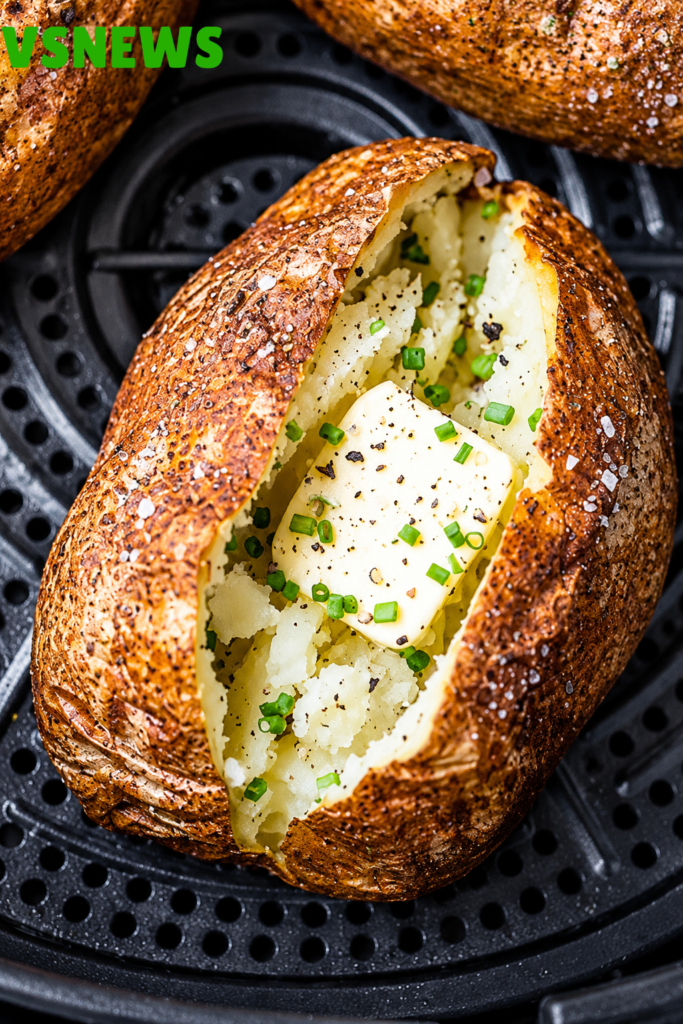
Getting a crispy skin
A few adjustments consistently show up across recipe sources when skins turn out soft rather than crisp:
- Dry the potatoes thoroughly after washing. Any surface moisture steams the skin instead of crisping it.
- Use a light coating of oil olive oil, rapeseed oil, or avocado oil are all commonly recommended rubbed evenly over the skin, then a sprinkle of salt worked in with your fingers.
- Don’t overcrowd the basket. Leave space around each potato so hot air can circulate; four medium potatoes is a sensible maximum in most standard baskets.
- Turn or shake halfway through cooking so both sides brown evenly.
- Finish hot. If the skin still isn’t crisp enough after the main cook, Arla’s recipe suggests raising the temperature to 200°C for a further 5–10 minutes at the end.
Food safety: why foil matters more than you’d think
One detail that’s easy to overlook is what happens after the potato comes out of the air fryer, particularly if you’ve wrapped it in foil at any point or plan to keep leftovers.
The US Department of Agriculture’s Food Safety and Inspection Service (FSIS) has documented that botulism illnesses a rare but potentially life-threatening form of food poisoning caused by the bacterium Clostridium botulinum have in recent decades been linked to foods including baked potatoes sealed in aluminium foil. The bacteria that cause botulism are common in soil, meaning spores can be present on potato skins. Foil wrapping creates a low-oxygen environment, and if a wrapped potato is then left at room temperature for an extended period, that combination can allow the bacteria to grow and produce toxin. This isn’t a concern specific to air fryers it applies to any foil-wrapped baked potato but it’s worth knowing if your routine involves wrapping potatoes in foil before or after cooking.
The most well-documented case was a 1994 outbreak in El Paso, Texas, where a restaurant’s foil-wrapped baked potatoes, held at room temperature before being used in a potato-based dip, caused illness in around 30 people, according to a case report published via the New England Journal of Medicine’s clinical resource pages, Beware Foil-Wrapped Potatoes. Cases like this remain uncommon, but food safety guidance is consistent on the fix: don’t leave a foil-wrapped potato sitting out at room temperature for more than about two hours, and if you’re not eating it straight away, remove the foil before refrigerating leftovers.
Since most recipes for jacket potato in air fryer cooking skip foil entirely cooking the potato directly in the basket this risk mainly applies if you choose to wrap potatoes before or after air-frying, or if you’re storing leftovers from a batch cooked elsewhere.
FAQs
Do I need to prick jacket potatoes before air-frying?
Yes. Pricking the skin several times with a fork or sharp knife lets steam escape as the potato cooks, which most recipe developers recommend to prevent the potato from splitting or bursting during cooking.
Can I cook more than one jacket potato at a time?
Yes, as long as they’re arranged in a single layer with some space between them so hot air can circulate. Overcrowding tends to produce uneven cooking and a softer skin.
Why is my jacket potato skin still soft after cooking?
This is usually down to leftover surface moisture, too little oil, or an air fryer basket that’s too full. Drying the potato thoroughly before oiling, and finishing with a few extra minutes at a higher temperature, generally solves it.
you may also read about : Stephen Graham Movies and TV Shows: A Career Guide